Most Powerful Bitcoin BTC Mining Rig
A veritable mine in Washington state is pumping out an estimated $8 million in Bitcoins per month. Local TV news station KOMO News was given a peek at what the people behind it are calling 'the largest mine in North America and most of the rest of the world.' Built across two warehouses, the racks of constantly running mining rigs combine to provide a petahash of processing power, at the expense of 1.4 megawatts of electricity, devoted to solving the increasingly complex algorithm that generates Bitcoins. The result is monthly earnings of $8 million in Bitcoin per month, according to the report. ) Although the location of the warehouse was kept private, it was key to maximizing profits for the mining rig.
The area where the facility was built was chosen for its access to cheap and reliable electricity, according to the report. Being a local TV news story, the report is a bit sparse on the details, such as what kinds of mining rigs the operation uses, and how expensive each one is. The International Business Times that a Neptune mining rig, which produces about 2.1 Bitcoins per day, costs $13,000 each.
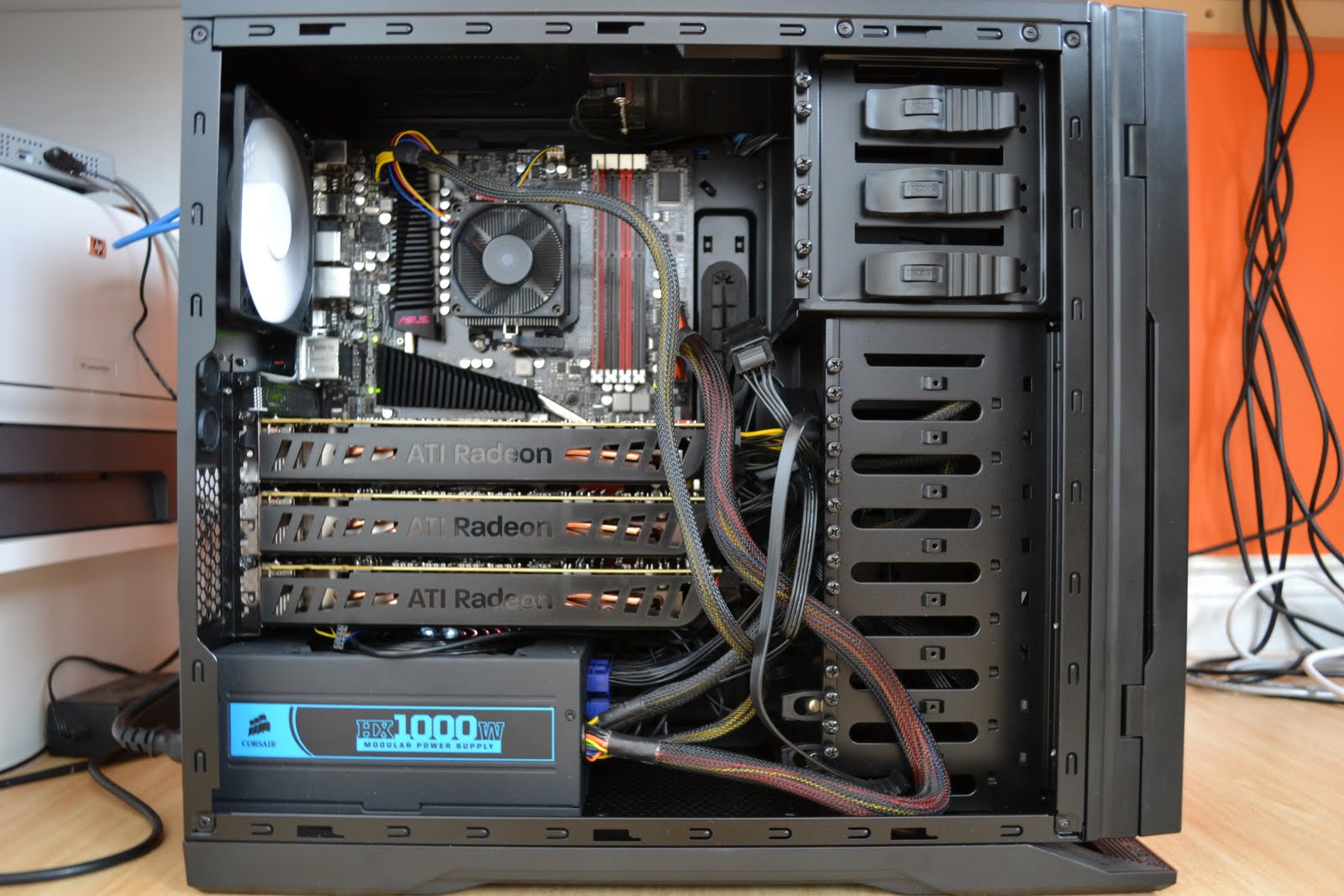
In choosing the most efficient GPU the most important thing is striking a balance between how powerful you want your rig. As we have seen with Bitcoin mining.
It'd be interesting to see what kind of wholesale agreement this kind of operation could get. The project is just one example of what can only be called a gold rush for Bitcoin. Even now, in relatively difficult times for the Bitcoin community, one Bitcoin is worth about $625, according to Preev.com's Bitcoin converter.
Those who missed the investment opportunity when Bitcoin was cheap a few years ago might deem the hardware necessary for large-scale Bitcoin mining a worthy investment.
Let's say mining yielded $500/day and $5/day in heat value. If everyone used their rigs for spare heat, and 'sold' that additional $5 (by reducing their heating bill by $5) they could plow that additional $5 into their mining rig, and increase their mining capability by 1%. What happens when hash rate increases? Ding ding ding difficulty increases. So now we're just left with the 'mining for heat' people breaking even again, and anyone that isn't saving spare heat is left sitting around with their dicks in their hands subsidizing the heating of the other miners. • • • • • • •. Actually, the difficulty is more or less mathematically insignificant in this calculation.
All we need to know when is that roughly the same amount of BTC will be generated each day and distributed to the total hashpower. Other than this nitpicking, you're right of course: If bitcoin stops skyrocketing like this, and it probably will have to, then hashpower will catch up and we'll be at breakeven again. How Do You Mine A Bitcore BTX there.
And to be fair, if you believe btc will keep going up there's an easier way to profit from that. So basically, you're right - I hadn't thought this over enough. It's not a no-brainer. I still think it's a feasible idea, but it's not without risk. If I had still lived in the north I'd give it a go though, sounds like something fun to try. • • • • • • •. Gpu HTMLCOIN HTML Mining 2018 more. 'It wouldn't be economical because in most environments inhabited by humans heat pumps are more efficient than electrical heating by very large factors, so you'd be paying extra for using electrical heat over a proper, efficient, low-energy-usage heat pump.'
Heat pumps are about twice as effective. So living in a cold climate more or less halves the cost of electricity for mining. Not great, but it does make it a little more attractive than in hot climates. Maybe I'm underestimating how harsh competition is in this market? For example, right now bitcoin just had a meteoric rise, is enough new hardware in place already to make profit margins too tight for small players?
Edit: I took a look at historical price and hashrate, and concluded that at least right now it's very likely that profit margins are pretty good until hardware acquisition catches up. • • • • • • •.